The most common benign tumour in women — modern laparoscopic treatment.
Uterine fibroids (leiomyomas) are the most common benign tumours of the female reproductive system. About 25% of women over 30 develop fibroids, and approximately 25% of those experience symptoms.
They may occur as a single growth or in multiple numbers within the uterus. Most fibroids do not require treatment, but when they cause symptoms, modern surgery offers effective solutions.
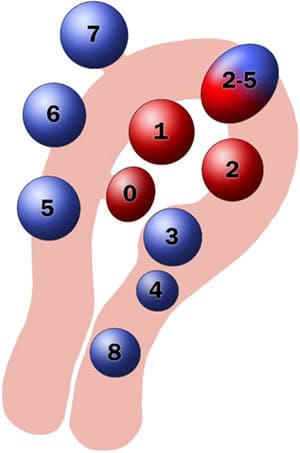
Depending on their location, fibroids are classified as: submucosal (growing into the uterine cavity — causing heavy bleeding, anaemia, infertility and miscarriages), intramural (growing within the wall — typically symptomatic when exceeding 5 cm), and subserosal (on the outer wall — causing pressure symptoms and urinary/bowel disturbances).
Treatment is required when fibroids cause symptoms, are particularly large, or show rapid growth. Both conservative medical options and surgical approaches are available.
Depending on the fibroid's location, removal can be performed hysteroscopically (for submucosal), laparoscopically (for intramural and subserosal), or by open surgery. When conditions of location, number and size are suitable, laparoscopic removal is preferred for its well-known advantages.
With modern laparoscopic bags, fibroids can be morcellated within the bag (In-Bag Morcellation) without the risk of tissue dissemination within the abdomen. This method complies with the 2020 FDA guideline and is used at our Centre.
Our surgeons have performed hundreds of laparoscopic myomectomies at university hospitals in Switzerland and Sweden, applying the most modern techniques.