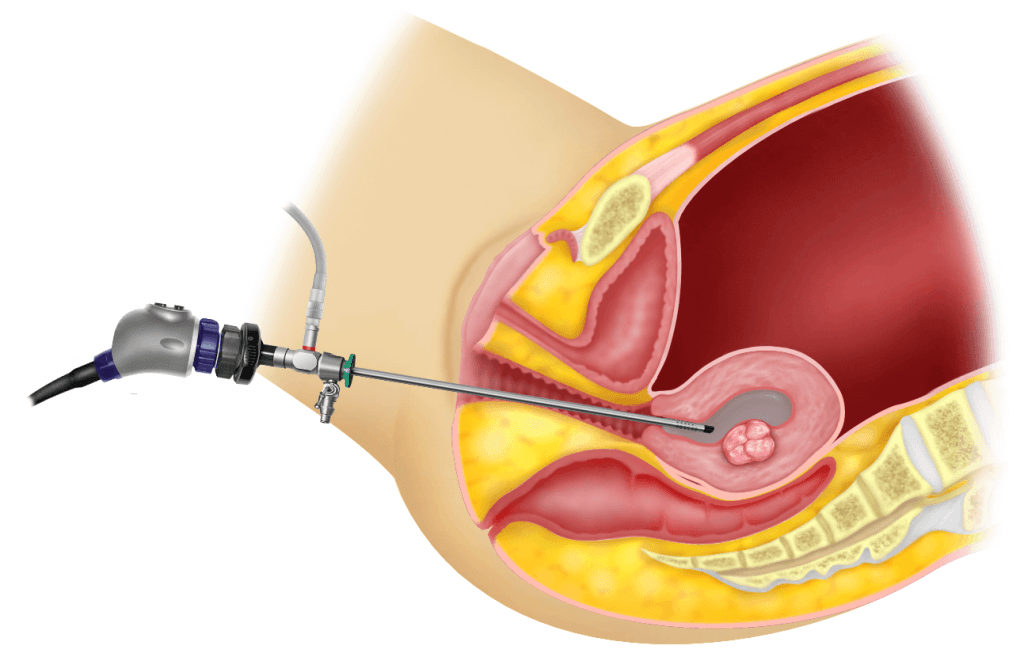
Diagnosis and treatment through the vagina and cervix — no surgical incisions.
Hysteroscopy is a method for diagnosing and treating pathological conditions of the endometrium and the uterine wall in contact with it. The procedure is performed through the natural openings of the vagina and cervix — no surgical incisions are required. Thin instruments and an endoscope connected to a high-resolution camera are used. The method is comparable to other endoscopic procedures such as gastroscopy and colonoscopy.
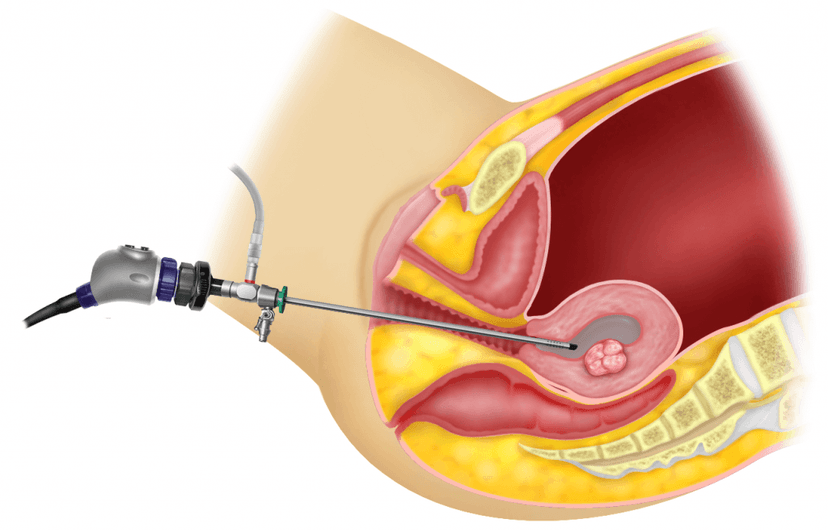
Advances in technology have significantly reduced the size of hysteroscopic instruments. As a result, cervical dilation and vaginal specula are no longer required (non-touch technique), reducing the risk of complications and eliminating post-procedure pain.
The type of anaesthesia recommended depends on the extent of the procedure. For small polyps or fibroids, light sedation is sufficient, while for more extensive pathology, general anaesthesia with intubation is used.